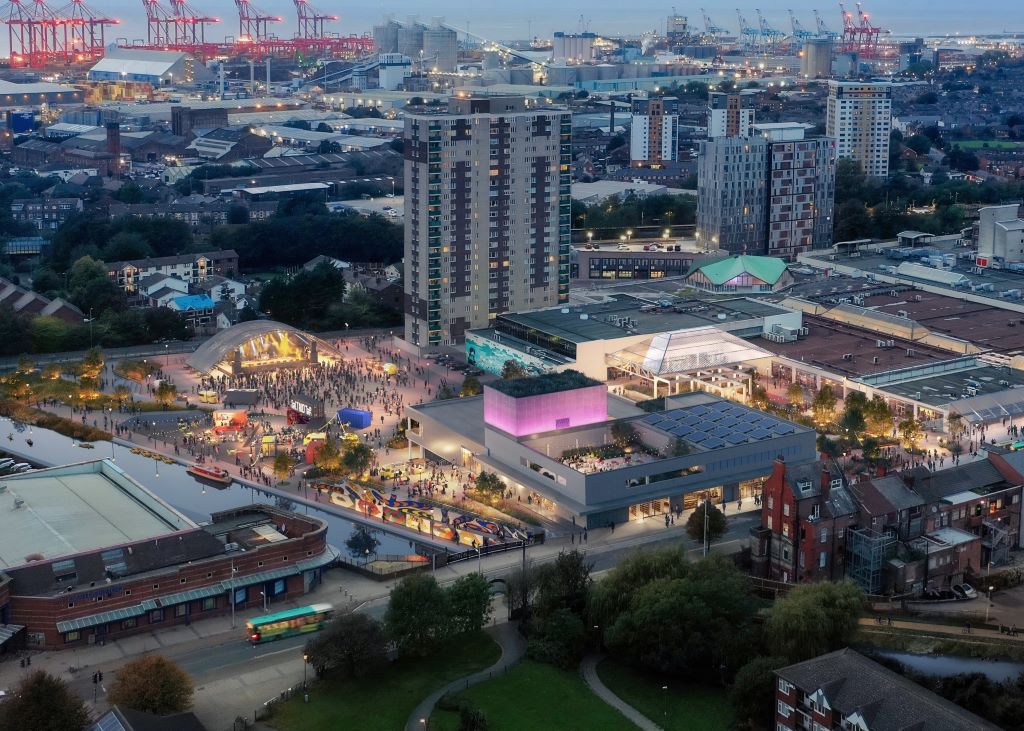
Strand Transformation, Bootle
The Strand Transformation is a phased regeneration project aimed at redefining Bootle's identity by re-establishing a strong 'sense of place' and reconnecting the town centre with its key assets, the high street, canalside and waterfront.
The Brief
The Strand Transformation is a phased regeneration project aimed at redefining Bootle's identity by re-establishing a strong 'sense of place' and reconnecting the town centre with its key assets, the high street, canalside and waterfront. The scheme enhances the public realm and overall perception of the area, encouraging increased footfall, longer dwell times and stronger local economic activity. At its core it promotes health, wellbeing and community engagement through flexible, adaptable public spaces that can evolve with changing needs, supporting a diverse mix of uses while avoiding a one-size-fits-all or gentrification-led model. Delivered in multiple phases, the strategy establishes a robust framework for long-term resilience and scalable, community-led growth.
The Challenge
The architectural lighting scope spanned the public realm and front-of-house interiors across Buildings A & B, plazas, access routes, hard and soft landscaping, pedestrian areas and vertical circulation (with highway and temporary lighting excluded). The design had to balance spatial hierarchy, visual comfort and environmental sensitivity: compliance with ILP guidance on obtrusive light, integration with BREEAM requirements, and minimising impact on the adjacent water environment through careful control of light spill, in liaison with the project ecologist and the Canal & River Trust.
What we delivered
A Lighting Masterplan Strategy established at concept stage in close collaboration with the client, architects and landscape team.
A Lighting Impact Assessment prepared for the planning submission that contributed to securing planning approval.
Fully coordinated detailed design, layouts, luminaire schedules, mounting details and control strategies, integrated with the architectural and MEP packages and aligned with the project cost plan.
Led the development of the architectural lighting design from feasibility through to detailed design and into construction review.
RIBA Stage 2: Established the Lighting Masterplan Strategy through close collaboration with the client, architects and landscape team; undertook conceptual studies and strategic proposals informed by early massing and landscape layouts, prioritising spatial hierarchy, visual comfort and environmental sensitivity (ILP obtrusive-light guidance and BREEAM).
RIBA Stage 3: Developed the design to planning level, coordinated 2D layouts, outline specifications and a preliminary control strategy, with lighting calculations and isoline studies. Prepared a Lighting Impact Assessment for the planning submission, liaising with the ecologist and the Canal & River Trust to minimise impact on the water environment.
RIBA Stage 4: Led the detailed design and specification, fully coordinated layouts, luminaire schedules, mounting details and control strategies, ensuring integration with the architectural and MEP packages and maintaining design intent through final documentation.
RIBA Stage 5: Acted as technical lead on the client side, reviewing contractor submissions and technical proposals to ensure compliance with the approved design and safeguard quality and performance.
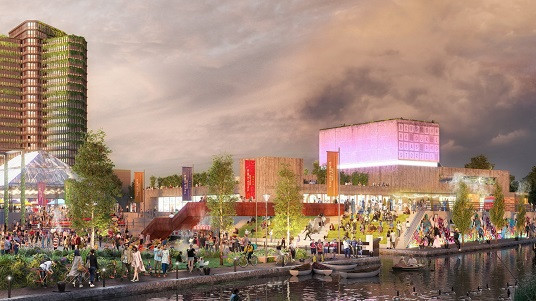
Project images
Project imagery courtesy of K2 Architects
Let’s shape
light together.
Available for lighting design, consultancy and collaboration across the UK and internationally.